
Quick Quotes over the phone!
Call now for expert advice!
(321) 242-1003
Fast Economical Repair
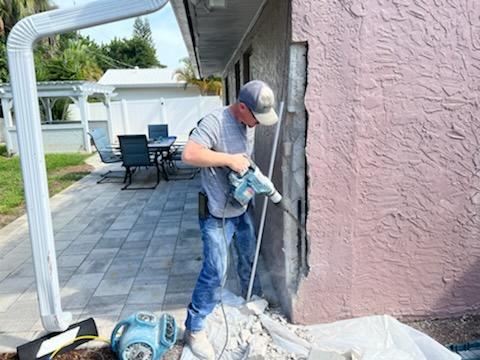
We can provide fast economical repair for your settlement issues. Our crew provides professional experience in performing repairs and we use our own equipment. We do not sub contract any of our work.
Licensed and Insured
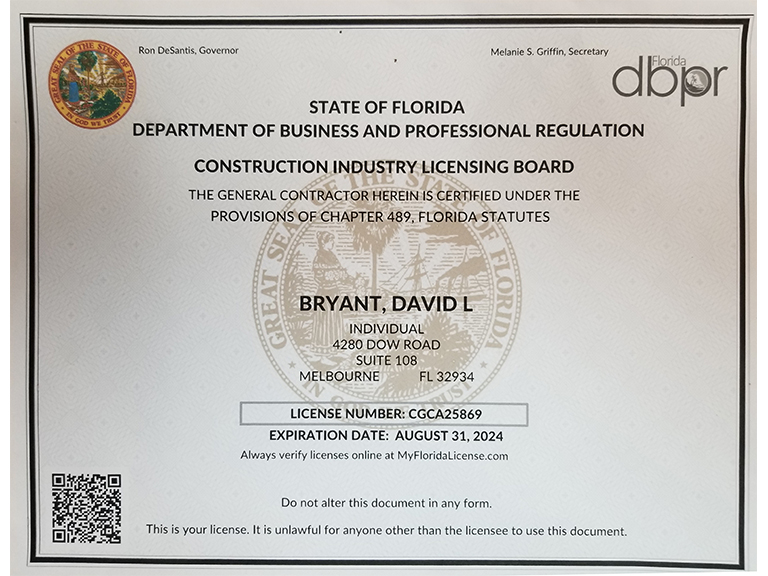
David L. Bryant, is a Registered Structural Engineer (FL Reg. #038154) and General Contractor (License #CGCA25869) in the State of Florida and owns and operates Certified Structure and Foundation, Inc.
Transferable Warranty
Our Warranty is transferable. If you plan on selling your home in the future, the Warranty for the repairs on the work we performed at your residence is transferable to the new home owner.
Call now for a FREE INSPECTION!
Structural Repair Specialists
Settlement of homes and swimming pools is a serious problem that affects many home owners in Florida.
Certified Structure and Foundation, Inc. began in 1993 and is the best in the business. We stand behind our work and offer the best guaranty of any repair company. Much of our foundation underpinning work includes a lifetime guaranty (25 Years). We fix the problem, not treat the symptom. We also offer a wide range of engineering services.
Our Founder and President, David L. Bryant, is a Registered Structural Engineer and Certified Structure and Foundation Inc. is a registered engineering company in the State of Florida, (FL Reg. #038154). David is also a licensed General Contractor in the state of Florida, (License #CGCA25869). Over the past 30 years, he has designed, built, and repaired almost every kind of structure imaginable from single family homes and high-rise condominiums to launch pads for NASA.
Foundation Settlement Stabilization
Many foundation settlement problems are due to lose soil located beneath the building foundations. Stabilization is the process of transferring the building weight (foundation loads) to deeper "stronger" soils capable of supporting the building. Methods of Stabilization include the construction of new shallow pier foundations, and drilled piers.
The Florida Building Code only requires compaction testing directly beneath the foundation and does not require investigation or testing of the soil below the surface. Many times contractors only compact 12" of soil to pass their compaction test and never investigate (or test) deeper soil conditions. Because of the lack of soil testing, homes are often built on loose soil which has insufficient capacity to support the weight of the structure. As a result, many buildings experience abnormal foundation settlement resulting in the floors sloping and unsightly wall cracks.
The most common foundation stabilization methods are stabilization with cement piers, and mud jacking the weak soil layer as shown below.
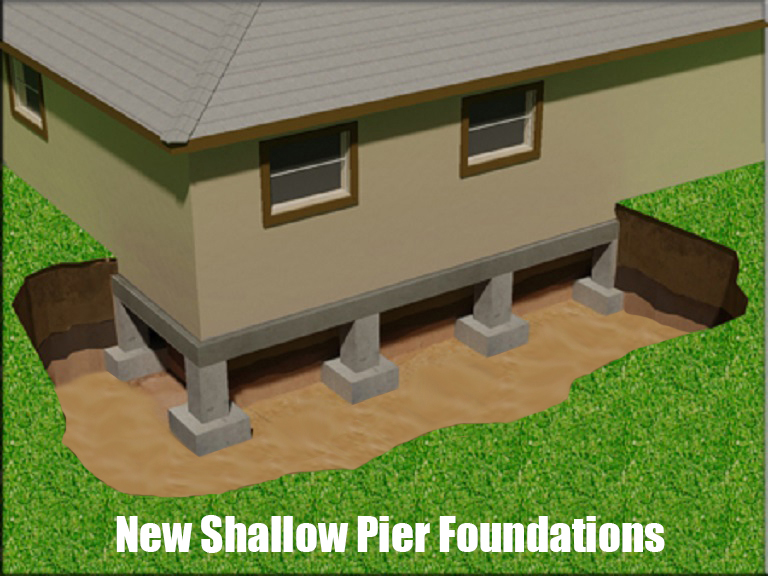
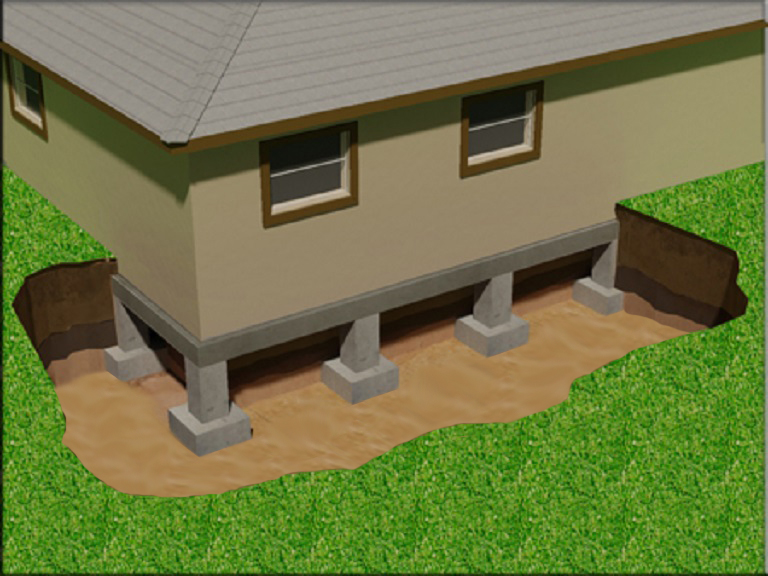
Stabilization with new "shallow" Pier foundations is the preferred (and most economical) method to stabilization foundation settlement when the weak "problem soils" are located directly beneath your home or building (within 6 feet below the surface). These steel-reinforced cement piers will extend through the weak soil to the firm soil below. The new cement pier foundations will be “cast in place” beneath the existing foundation areas and can be used to support this area of your home or building. To minimize disturbance to your “fragile” foundation and your yard, all piers will be dug by hand. After the home is stabilized, we will then pump cement grout beneath the floors to fill any voids. SEE MUDJACKING INFORMATION BELOW
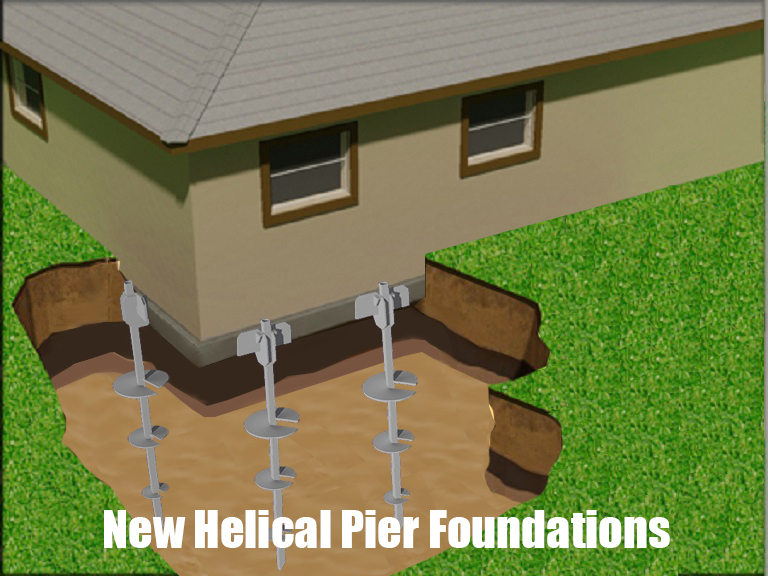
Underpinning with new "Helical" Pier foundations is the preferred method to repair foundation settlement when the weak "problem soils" are located deep beneath your home or building (more than 6 feet below the surface). These galvanized steel helical piers will be screwed through the weak soil to the firm soil below. We install CHANCE® helical piles and helical anchors which are the original and the highest quality helical piles used within the structural and geotechnical engineering industries. The ability to be utilized in both tension and compression applications make the pre-engineered system an attractive alternative to the foundation stabilization and earth retention sectors of the construction industry.
The helical system is segmented with helical bearing plates welded to a central steel shaft. Load is transferred from the structure through the shaft to the soil through the bearing plates. Central steel shafts are available in either Type SS (Square Shaft) series or Type RS (Round Shaft) series. SS-RS combinations are available when conditions require a deep bearing strata with an increased need for lateral stability.
Lifting brackets are installed on the helical shafts to allow placement of hydraulic jacks wich can be used to lift the building foundation. After the home is lifted, we will then pump cement grout beneath the floors to fill any voids created by the lifting procedure and to stabilize the floor slab. This type of pressure grouting (also called mud-jacking) will fill the void, and can also be used to lift the floor slab when required. SEE MUDJACKING INFORMATION BELOW
Pressure Grouting
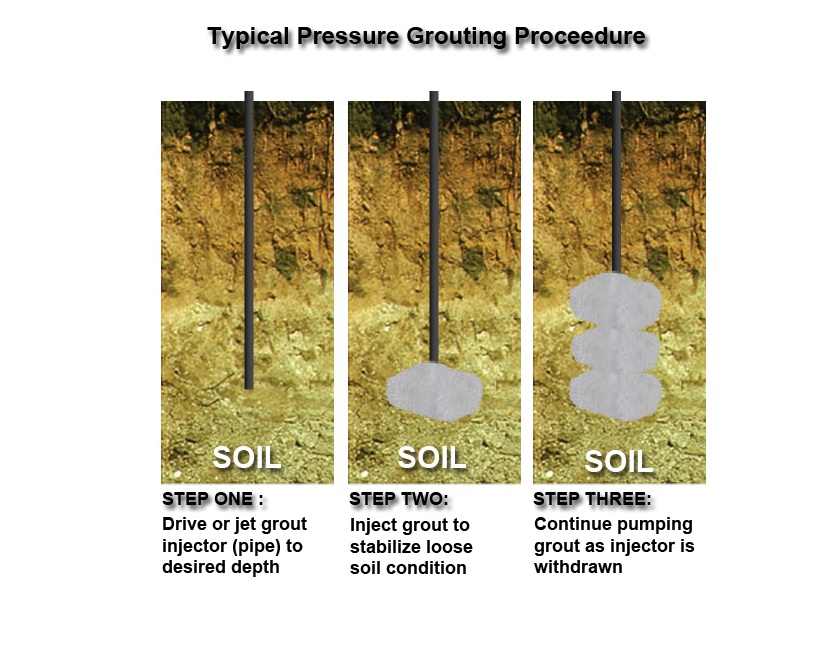
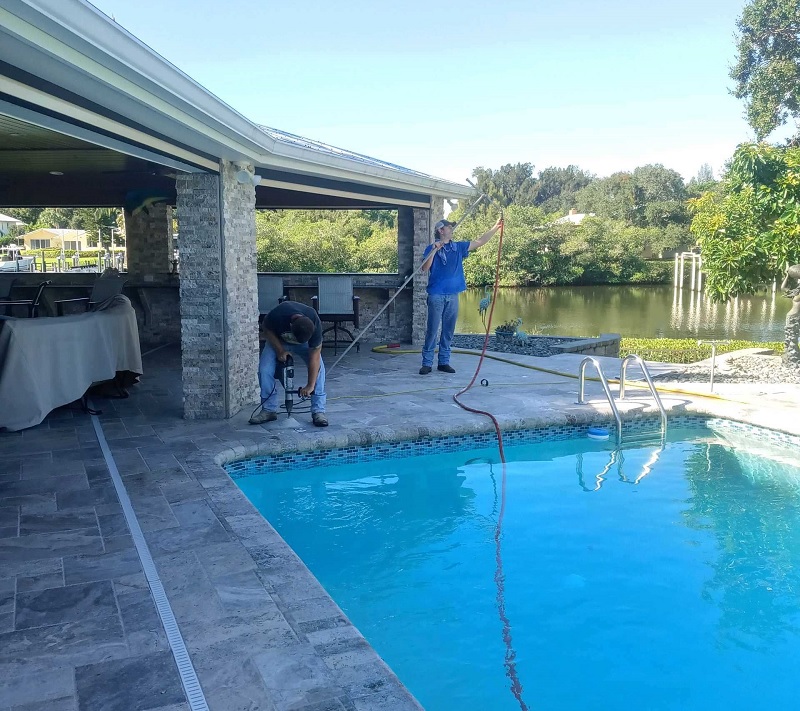
Pressure grouting is the process of pumping cement grout into the soil beneath structures that are experiencing abnormal settlement. Grout is pumped through steel pipe injectors (needles) that have been jetted or driven into the weak soil beneath a building or other structure. The depth of each injection is dictated by the exact soil condition at that location, and by the weight of the structure being supported. Typically, grouting depths vary from 4 feet to 25 feet below the surface. Deeper injections could be required to fill sinkholes or support tall buildings. Grouting depths beneath typical homes normally do not exceed 15 feet. The pressure at which the grout is injected also depends on the soil and the weight of the structure, and is between 50 psi and 500 psi.
Pressure grouting is a very powerful tool when performed by qualified personnel under the direction of an engineer who is experienced in this field. Pressure grouting can be disastrous when performed by inexperienced personnel. It is easier to break things with high pressure grout than it is to fix things. It is common for inexperienced grouting crews to hump up floors, fill plumbing lines, and crack swimming pools. If you have a building or pool that may require pressure grouting make sure that the contractor you choose is state licensed, insured and working under the direction of a Professional Engineer. The smart building owner will require proof of license, insurance certificates specifically directed to them, and the name, license number and phone number of the engineer supervising their work.
Mudjacking/Slabjacking
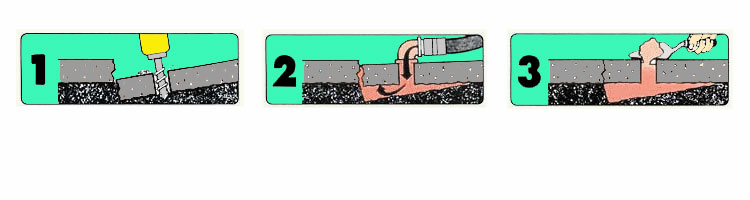
Mudjacking is the process of pumping cement grout under a concrete slab in order to stabilize the slab. We drill strategically placed holes through the slab and pump cement grout (under pressure) into the soil or void beneath the slab. stabilizing a slab using this method can often be accomplished by a qualified grouting crew in a typical work day.
We have successfully mud-jacked (slab-jacked) over five hundred building floor slabs over the last 25 years throughout Florida. Please call us for a free inspection and stabilization proposal. Urethane foam injection is another method commonly used to raise slabs, however, we no longer use this method because the foam is harder to control, has less strength than cement, is not a permanent solution, and ends up costing the customer more money.
Pool Deck stabilization
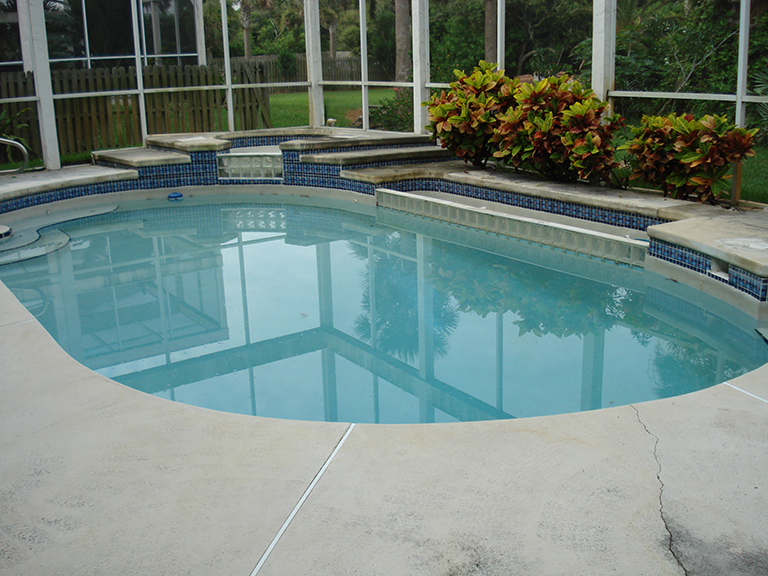
Settlement and cracking of concrete pool decks is a common problem because of the sandy soils we have in Florida. Abnormal settlement may be the result of naturally loose soil, poorly compacted soil, buried organic material that is decaying, and/or water leaks.
Concrete pool decks usually experience abnormal settlement and cracking because the soil beneath them was not properly compacted during construction. Most pool contractors are reluctant to mechanically compact the soil adjacent to the pool for fear of breaking the pool plumbing "return" lines that are buried around the perimeter of the pool. Over time this loose soil consolidates and ceases to provide adequate support for the pool deck, causing the deck to settle and crack.
We have successfully mud-jacked and stabilized hundreds of swimming pool decks throughout Florida. Please call us for a free inspection and stabilization proposal.
Common signs of building settlement
Because of Florida's geological history, the type of shallow surface soils that support our buildings are relatively loose sands, clays, and decaying organic material.
The most common visual indicators of foundation settlement are:
1. Noticeable slopes in concrete floor slabs or floor framing.
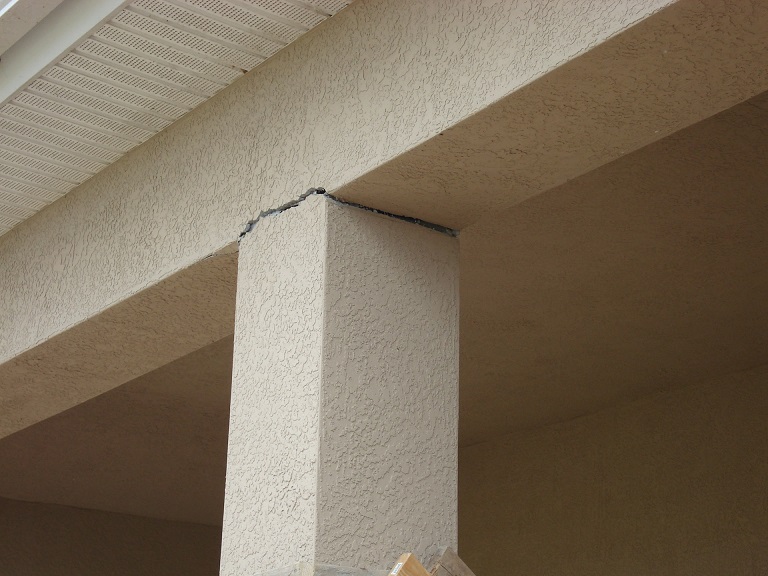
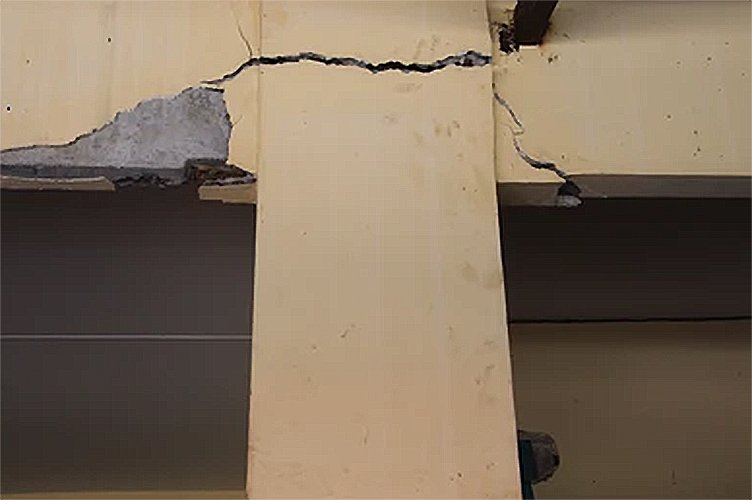
2. Cracks in exterior or interior walls, wider than 1/16".
3. Misalignment of doors or windows (doors rubbing).
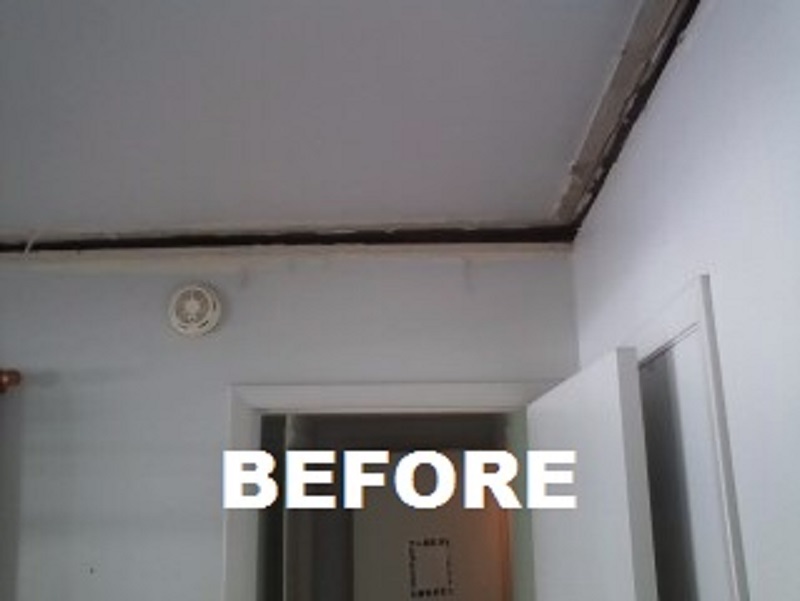
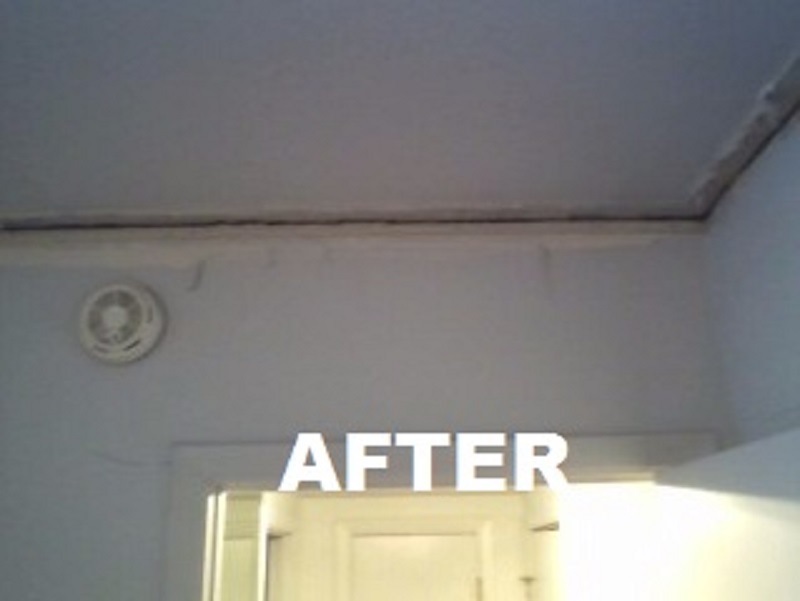
4. Gaps below baseboards or above interior walls.
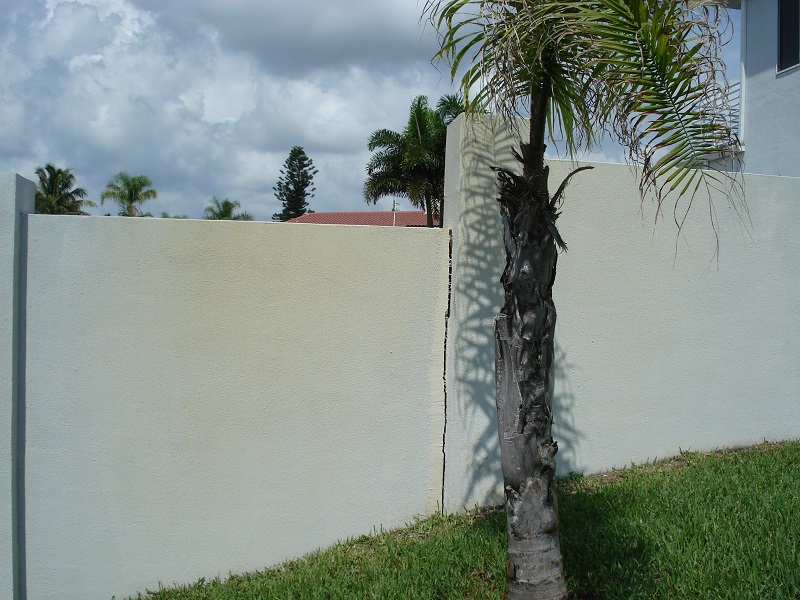
5. Cracks in the exterior masonry.
The most common visual indicators of swimming pool settlement are:
1. Uneven waterline compared with tile line.
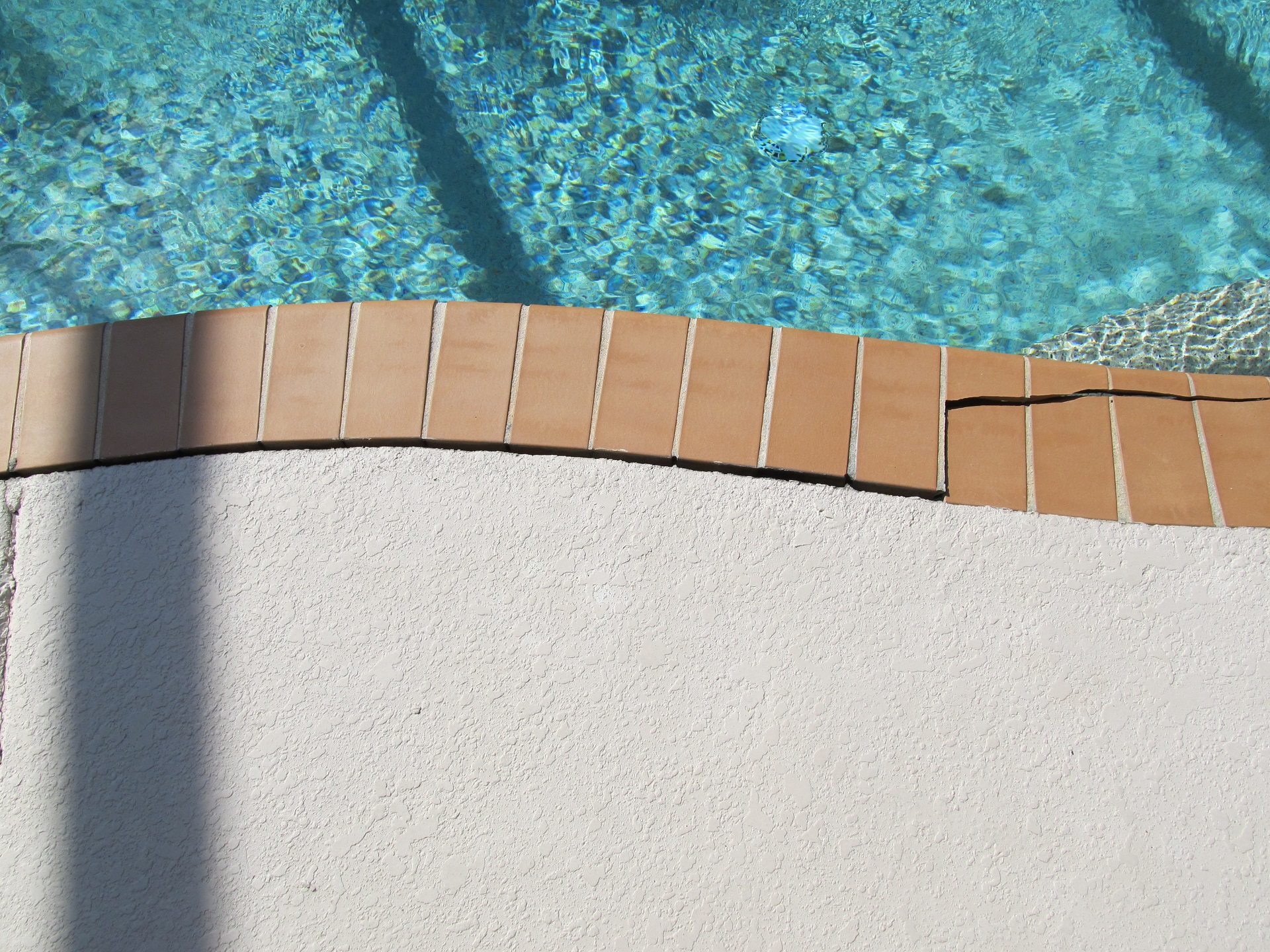
2. Cracks in pool tank, pool tile, and/or coping.
3. Excessive sloping and/or cracking of pool deck.
While most homeowners are aware of problems with their home or swimming pool, they may not be aware that weak soil is the cause. The tendency is to treat the symptoms without addressing the underlying soil condition. Of course, this leads to remedies and patches that usually create a much more expensive repair later. Cracks should never be filled or patched until the underlying soil has been strengthened. There are multiple ways to strengthen soil and make repairs, however, not all repair procedures work on all soils. Owners should only consult companies with engineers on staff (such as us) when seeking repair options.
Structural Engineering
David L. Bryant is a Registered Professional Engineer and Certified Structure and Foundation Inc. is a registered engineering company in the State of Florida, (FL Reg. #038154). David is also a licensed General Contractor in the state of Florida, (License #CGCA25869). With more than 20 Years of Professional Engineering experience, we can provide certified engineering reports and drawings in a timely and cost effective manner.
Inspections and soil testing on structures and/or swimming pools experiencing "abnormal" settlement are performed at no cost (free). They include an onsite evaluation and a written proposal outlining the repair cost and repair procedures; however, professional engineering reports are not included with "free" repair proposals. If you need a certified engineering report or engineered drawings, a fee for professional services may apply. We will gladly quote fees for engineering services over the phone. Call our engineering line at [321] 254-7913. For more information or to request an inspection via email please visit our engineering website at http://dbryantpe.com.
Call Now for your FREE Inspection! (321) 242-1003
Call us now to schedule your free onsite inspection and get your free repair estimate.
Call Now!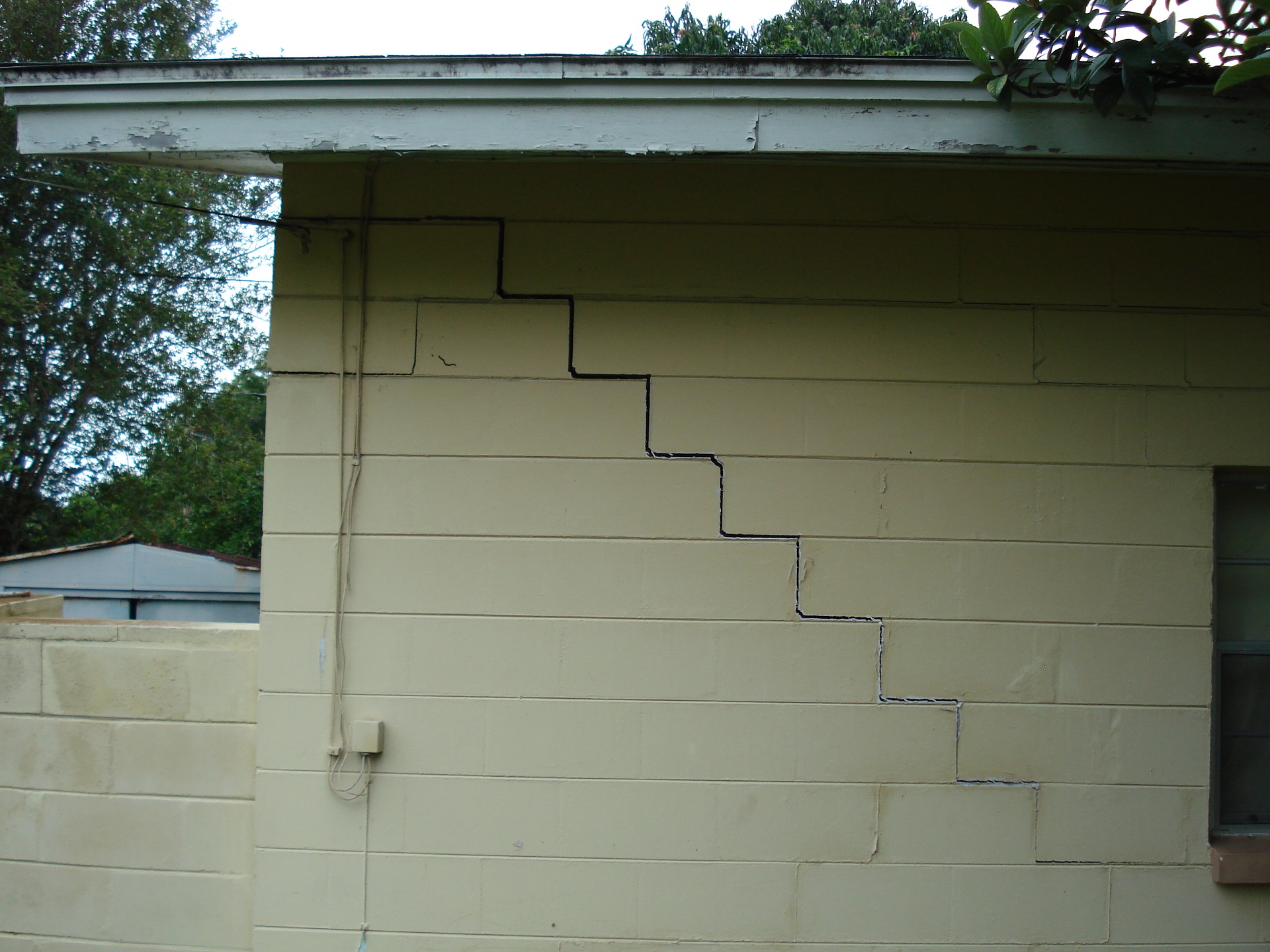
Services
Foundation Settlement Repair
Depending on the depth of the weak soil condition below the foundation, in most cases cement pier foundations can be used. This is a more economical option
Cracked Walls
Cracks in walls are typically a sign of a settlement issue taking place below your foundation. Over time this will get worse and other issues may become present.
Crawl Space Foundation Repair
If your floors or walls are settling in a home with a crawlspace foundation, we can help! We can repair and replace damaged or missing concrete piers.
Helical Piers
Where deeper soil conditions exist, we can install "Chance" Helical Piers. We are a certified "Chance" Helical Installer.
Pressure Grouting
Voids under slabs and foundations can be pressure grouted by injecting pressurized cement grout in those locations. This can stabilize and even level uneven floors.
Mud Jacking/Slab Jacking
sloping, cracking, and sinking Patio Slabs, and driveways can be Mud Jacked and leveled using this method.
Concrete Spalling Repair
Rusting rebar and cracking block walls in the corners of your home is not a pretty sight! We can remove and replace the damaged rebar and pour new concrete corners with closely matching stucco.
Pool Tank Repair
Is your pool tank cracked? Is it leaking? We can help! We can pressure grout behind the pool tank in the problem areas, filling the voids and sealing the tank.
Pool Deck Repair
Is your pool deck cracked and sinking? No Problem, we fix pool decks throughout Central Florida on a weekly basis. Call us to schedule your FREE Inspection today!
Commercial and Industrial Soil Stabilization
We can provide soil stabilization for a host of applications, large silos, hollow factory floor slabs, loading docks, even launch pads. Call us to discuss you soil stabilization needs.
Pre-Construction Pressure Grouting
Buidling a new home? We can Pressure Grout the soil below the new foundations before they are poured. This will strengthen the soil and stop future settlement issues before they begin.
Abandon in Place
Do you have underground pipes that need to be abandoned in place? We have you covered! We can pressure grout the pipes, filling them with cement grout.
Articles
The following article appeared in the Saturday, November 24th edition of Florida Today in the Space Coast section.
Do You Have That Sinking Feeling?
By David Bryant P.E. Certified Structure and Foundation, Inc.
Settlement of homes, additions, swimming pools, and porches is a serious problem that affects many homeowners in Florida. The obvious signs of settlement are cracking of your walls, doors or windows not closing properly, and sloping of your floor slab or outside corners of your home. If there are cracks in your pool or the waterline is uneven then you may have abnormal settlement. Most contactors are not engineers and do not have the expertise to properly repair buildings with settlement problems. Therefore, before you do anything, contact CERTIFIED STRUCTURE AND FOUNDATION, INC. for a soil test and engineering analysis of your problem.
As a structural engineer with over 30 years of experience solving settlement problems, I can help you decide how to repair your home properly and economically. Never try a "do it yourself" fix of your settlement problem! Digging around or below your foundation and pouring concrete is a bad idea. The weak soil causing your problem is typically deeper and the additional weight (of the concrete you poured) will only accelerate the settlement. If you do have settlement problems at your home, business, or the condominium where you live, we offer inspections, soil testing, and engineering opinions covering a full range of repair options.
The most common and economical repair technique is "pressure grouting" which consists of injecting cement grout into the weak soils beneath your foundation, usually beginning at a depth of 10 feet. If your home has experienced excessive settlement, it may require "underpinning" of the foundations using piers or piling to transfer the foundation loads to deeper, more stable soils. In most cases, your foundation can be lifted back to its original elevation. Of course, you want the most economical repair solution, therefore, you would not want to underpin your home with piling capable of supporting a five story building when pressure grouting will solve your problem for a fraction of the cost. To stabilize minor settlement of one corner of your home should cost approximately $3,800 dollars for labor and materials.
To underpin and lift one corner with excessive settlement could cost much more. That is why it is very important to strengthen the weak soil as soon as you notice a problem. Contact our office for your inspection and soil test. We will perform a thorough investigation of your settlement problem and test the soil to a minimum depth of eight feet. At that point, we will be able to make engineering recommendations, which usually include several options for repair and their associated costs. I would advise anyone with a settlement problem to "Do your homework" and get a qualified engineering opinion before you spend money to fix your building. We are the best in the business and we offer the best warranty. See our ad below and call us at 321-242-1003. We also offer a wide range of engineering and construction services that are beyond the scope of this article.
David Bryant P.E. is a Registered Structural Engineer (FL Reg. #038154) and General Contractor (License #CGCA25869) in the State of Florida and owns and operates Certified Structure and Foundation, Inc. Over the past 30 years, he has designed, built, and repaired almost every kind of structure imaginable from single family homes and high-rise condominiums to launch pads for NASA.
CERTIFIED STRUCTURE AND FOUNDATION INC.
Call us for a FREE Inspection.